Mediterranean Kitchen Design: A Practical Guide to Warm Materials
From hand-glazed tiles to unlacquered brass, here is how to build a Mediterranean kitchen that works as beautifully as it looks.
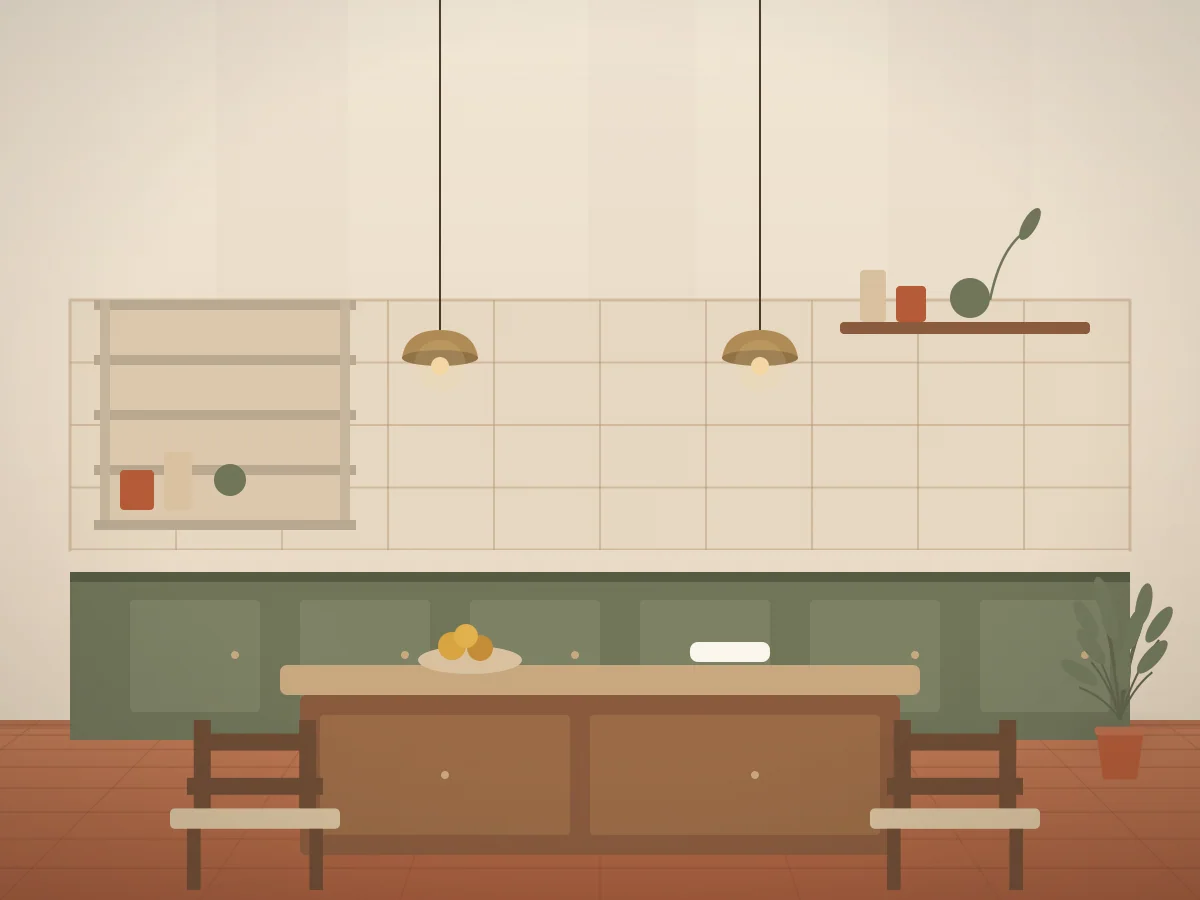
A Mediterranean kitchen is not a colour scheme. It is a way of building: honest materials, work surfaces that can take a hot pan, and a layout that lets several people cook, talk and eat without colliding. Get those fundamentals right and the room will feel effortlessly warm. Get them wrong and no amount of olive wood will save it.
Key takeaways
- Plan the working triangle and clearances before choosing a single tile.
- Use hand-glazed or zellige tiles where you will see them, and durable porcelain where you will not.
- Warm oak, limestone and unlacquered brass age beautifully — but need the right sealant.
- Spend first on extraction, task lighting and a genuinely comfortable worktop height.
Start with the workflow
The best Mediterranean kitchens feel generous because they are planned around movement, not symmetry. Keep the sink, hob and main prep area within easy reach of each other, and make sure the dishwasher does not block the route between them. If the room is narrow, a single run with a slim island is usually better than a cramped galley.
| Between | Minimum | Comfortable |
|---|---|---|
| Worktop and island | 900 mm | 1,000–1,200 mm |
| Worktop and wall cabinets | 500 mm | 550–600 mm |
| Hob and extractor | 650 mm (electric) | 700–750 mm |
| Dining table and wall | 800 mm | 900–1,000 mm |
Worktop height deserves more attention than it gets. The standard 900 mm suits an average-height person, but anyone tall will feel it in their shoulders after ten minutes of chopping. Ask to stand at a mock-up, or calculate roughly 150 mm below elbow height. If two people cook regularly, consider a slightly lower prep zone for one of them.
Choose materials that improve with age
Mediterranean kitchens work because they use materials that show their history. Hand-glazed zellige tiles have uneven surfaces and shifting colour; limestone softens and patinates; oak darkens in the light. These are not defects to be engineered out. They are the reason the room feels alive.
That said, not every surface should be precious. A full wall of zellige behind a boiling hob is expensive and difficult to clean. Use it as a splashback in a protected area, and choose a large-format porcelain or sealed stone elsewhere. The same logic applies to worktops: a beautiful white marble will etch if you squeeze a lemon on it, while a quartzite or sealed granite offers a similar look with fewer compromises.
A quick material comparison
| Material | Best for | Watch out for |
|---|---|---|
| Zellige | Splashbacks, feature walls | Uneven surface; seal and clean gently |
| Limestone | Floors, worktops | Acid-sensitive; needs sealing |
| Terracotta | Floors, informal kitchens | Chipping; seal against stains |
| Solid oak | Islands, open shelving | Water marks; oil regularly |
| Quartzite | Hard-working worktops | Higher cost; choose a reputable fabricator |
Pick a cabinet colour you can live with
Warm white, mushroom, sand and soft olive are the safest choices for a Mediterranean kitchen, especially in smaller rooms. They reflect light and let the materials do the talking. If you want deeper colour, use it on a single island or a tall run rather than every cabinet. Charcoal or ink-blue joinery can look wonderful beside oak and brass, but it needs plenty of natural light.
Consider a mix of door types rather than one uniform finish. Glass-fronted cabinets for everyday glassware, solid doors for messy storage and open shelves for the things you actually enjoy looking at. Avoid filling every wall with open shelving: grease and dust are real, and a little concealment keeps the room calm.
Get the lighting and extraction right
Kitchens need more light than most rooms, and it needs to come from more than one direction. Aim for a general layer, a task layer over the worktop and a low layer for evenings. Under-cabinet LEDs are inexpensive and transformative; pendant lights over an island should hang around 75–85 cm above the surface so they frame faces rather than glare.
Extraction is the least romantic purchase you will make and one of the most important. Ducted extraction always outperforms recirculating filters. Size the hood to the hob and the room, and make sure it is quiet enough that you will actually use it. A kitchen that smells of last night’s dinner is not a Mediterranean kitchen; it is a ventilation problem.
Style the edges, not the middle
Leave the main worktop as clear as possible. Put the character at the edges: a wooden board leaning against the wall, a bowl of lemons, a few ceramic jars, a small olive tree by the window. A single open shelf with everyday plates and a couple of cookbooks often looks better than a fully styled dresser.
Unlacquered brass taps and handles will patinate over time. If you prefer a consistent finish, choose aged brass or a brushed nickel instead. Avoid mixing too many metals in one sightline; two is usually plenty.
Where to spend and where to save
- Spend on: extraction, task lighting, drawer hardware, a comfortable worktop height and a good tap.
- Save on: decorative tiles in low-visibility areas, open shelving, and appliance brands where the core function is the same.
- Do not compromise on: waterproofing around the sink, enough power sockets and a clear route to the bin.
A Mediterranean kitchen should feel like a room where real meals happen: flour on the worktop, a chair pulled up to the island, a window open to the evening. Choose materials that can take that life, then let them age. For the floor, our terracotta tile guide explains how to get the look without the maintenance surprises. If you are renovating the whole house, pair this with our sustainable renovation checklist.