Modern Spanish Living Room Ideas for a Warm, Timeless Home
Layer limewash walls, curved furniture and terracotta accents to create a Spanish living room that feels collected, calm and thoroughly modern.
Spanish interiors are often reduced to a checklist of clichés: wrought iron, bright tiles and a few too many oranges. The rooms that actually inspire us are quieter than that. They rely on beautiful light, generous proportions and a small number of natural materials used with confidence. The result feels warm, relaxed and unmistakably Mediterranean — without ever looking like a theme restaurant.
Key takeaways
- Start with the architecture: light, plaster and a calm base palette do most of the work.
- Choose low-slung, curved furniture in natural fabrics rather than matching suites.
- Use terracotta, olive green and aged brass sparingly as accents.
- Layer lighting at three heights and keep surfaces deliberately under-styled.
Start with the shell, not the sofa
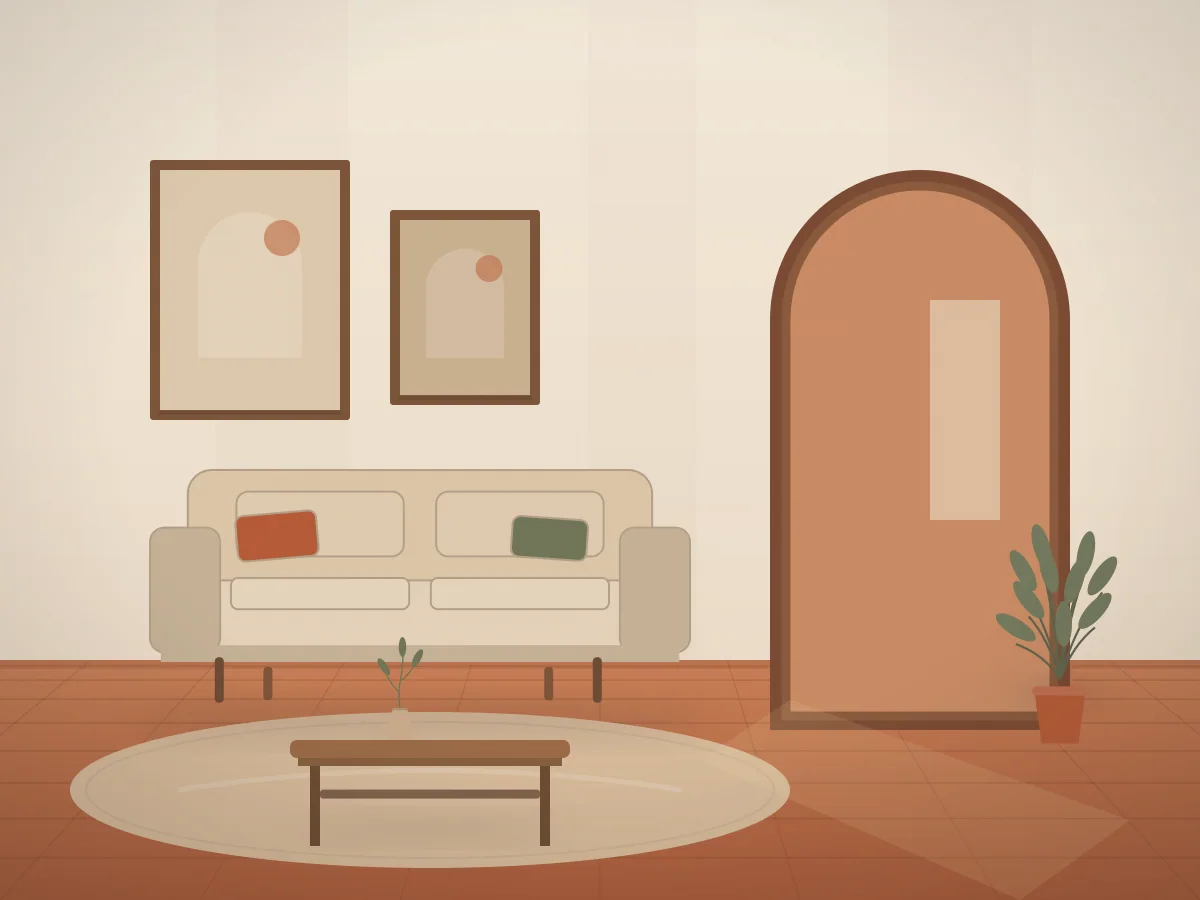
Before you shop for furniture, look at the room itself. Spanish design begins with the building: thick walls, deep window reveals, arched openings and floors that have had time to soften. If your room has these features, your job is to frame them. If it does not, you can borrow the same feeling with a few careful moves.
Limewash or mineral plaster gives walls a subtle movement that flat paint cannot match. It is forgiving of imperfections and shifts beautifully through the day. For a rented flat, a limewash-effect paint in a warm off-white is a practical alternative. Add an arched mirror or a curved alcove shelf to introduce softness without structural work, and keep window treatments light so daylight can travel deep into the room.
Flooring matters just as much. Terracotta tiles bring instant Mediterranean character, while warm oak boards are a quieter option. Either way, avoid covering the whole floor with a wall-to-wall rug; let the material breathe at the edges.
Choose low, curved furniture
Modern Spanish living rooms tend to sit low. A deep sofa with a relaxed back, a pair of rounded armchairs and a chunky coffee table create a generous, conversational arrangement. Curves soften the hard lines of a rectangular room and echo the arches found in older Spanish architecture.
Avoid buying a full matching suite. Instead, build the room around one anchor piece — usually the sofa — and add chairs, stools and tables that share a similar warmth but not an identical style. A vintage wooden chair beside a contemporary bouclé sofa looks collected rather than catalogued. Keep at least 45 cm between the sofa and the coffee table, and leave a clear walking path of around 90 cm around the main seating group.
Mixing old and new
The most convincing rooms follow an informal 80/20 rule: around 80 per cent calm, contemporary pieces and 20 per cent something older or more characterful. That might be a carved chest inherited from family, a pair of brass candlesticks from a market, or a rug with a faded pattern. The contrast is what stops a neutral room from feeling flat.
Build a warm, grounded palette
Spanish warmth comes from restraint, not from adding more colour. A simple three-layer palette keeps the room coherent while leaving space for texture. Think of it as 60 per cent base, 30 per cent secondary and 10 per cent accent.
| Layer | Share | Suggested tones | Where to use |
|---|---|---|---|
| Base | 60% | Limewash white, warm chalk, soft sand | Walls, ceiling, large rug |
| Secondary | 30% | Oak, linen, olive, mushroom | Sofa, curtains, cabinetry, flooring |
| Accent | 10% | Terracotta, burnt clay, aged brass, black iron | Cushions, ceramics, lighting, art |
Keep black iron for small touches — a lamp base, a curtain pole, the frame of a mirror. Too much dark metal makes the room feel harder and less Mediterranean. Aged brass is more forgiving and warms up in the evening light.
Layer natural textures
A room built on a neutral palette needs texture to stay interesting. Combine a chunky jute rug with a finer wool throw, slubby linen curtains with a smooth plaster wall, and matte ceramics with one or two glossy glazed pieces. The contrast should be felt rather than announced.
Natural fibres also age gracefully, which is part of their appeal. Linen creases, leather patinates and wood darkens. Treat these changes as features, not flaws. Wash linen covers at a low temperature, rotate cushions so they fade evenly, and feed wooden furniture once or twice a year with a suitable oil or wax.
Light it in layers
Spanish homes often feel golden because the light is soft and low. Recreate that with warm-white bulbs around 2700K and at least three sources in the room: a ceiling fixture for general light, a floor lamp for reading and a table or wall light for atmosphere. Put the main lights on dimmers if you can.
Position lamps so they light walls and corners rather than the middle of the room. A slim floor lamp behind a sofa, a sconce above a shelf and a candle on the coffee table will do more for the evening mood than a single bright pendant. Avoid cool-white LEDs in living spaces; they flatten the warmth of wood and plaster.
Style with restraint
The final layer is the hardest to get right. Choose one hero object per surface — a large ceramic bowl, a sculptural branch, a stack of art books — and leave the rest empty. An olive tree in a terracotta pot adds life and height without clutter. Hang art lower than you think: the centre of a picture should sit roughly at eye level, around 145–150 cm from the floor.
If you have a fireplace or an alcove, treat it as a composition rather than a storage opportunity. A mirror, two candlesticks and a single vase are usually enough. The empty space around them is what makes the arrangement feel calm.
Mistakes to avoid
- Too many “Spanish” motifs. One or two references are charming; a room full of them feels staged.
- Cool grey everywhere. It fights the warmth of terracotta, oak and linen.
- Overhead lighting only. Add low, warm sources for the evening.
- Rugs that are too small. The front legs of the sofa should sit on the rug, not float beside it.
- Filling every wall. Negative space is part of the composition.
Build the room slowly. Start with the shell and the largest pieces, live with them for a few weeks, then add the layers that make it personal. For the next step, explore our guide to terracotta flooring or borrow ideas from a rustic Spanish bedroom to carry the same warmth through the rest of your home.