Small Apartment Storage Ideas with a Mediterranean Feel
Make every wall work harder without making your home feel busier. Smart, warm storage solutions for compact apartments.
Small apartments rarely fail for lack of storage. They fail because the storage is in the wrong place, the wrong height or the wrong shape. A single wall of well-planned joinery will usually hold more than a collection of boxes, baskets and under-bed bags — and it will make the room feel calmer at the same time. The Mediterranean lesson here is simple: build for the life you have, not for the possessions you feel obliged to keep.
Key takeaways
- Audit what you own before designing a single shelf.
- Use the full height of a wall; the top 40 cm is often wasted.
- Choose furniture that does two jobs: a bench with storage, a bed with drawers, a desk with a cabinet.
- Keep the visible surfaces calm and put the visual noise behind doors.
Start with an honest audit
Empty one category at a time — books, clothes, kitchen equipment, paperwork — and decide what actually earns its space. Be ruthless with duplicates, broken items and things you keep “just in case”. Storage design is much easier once you know the real volume and dimensions of what remains.
Then map the zones. Everyday items should live between hip and eye height, heavy items low, and seasonal items high. In a small flat, the entryway, kitchen and bathroom usually have the highest density of small objects, while the bedroom carries the bulkiest items. Plan each zone separately rather than buying storage in one go.
Build vertically, but not randomly
Use the top 40 cm
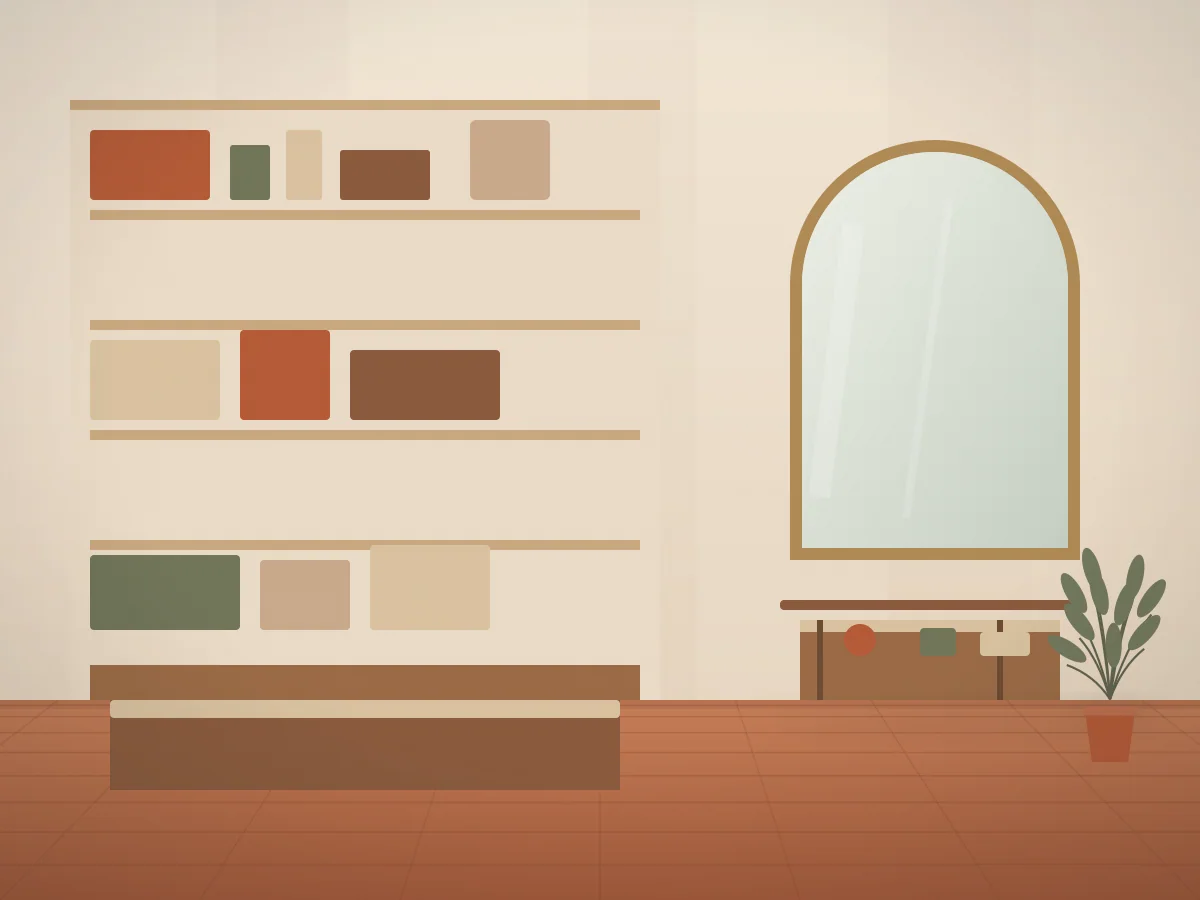
A floor-to-ceiling unit is the most efficient storage in a small home. Use closed cabinets for the visually messy things, open shelves for books and objects, and a slim bench or drawer bank at the bottom. If the ceiling is high, a top row of lidded boxes can hold suitcases and seasonal bedding without eating into daily space.
Make sure the unit is fixed to the wall. In rented flats, freestanding tall bookcases with anti-tip straps are a good alternative. Leave at least 60 cm of clearance in front of drawers and 80 cm in front of a wardrobe so you can open it without moving furniture.
| Zone | Best solution | Avoid |
|---|---|---|
| Entryway | Shallow shoe cabinet, hooks, shelf with a bowl | Deep cupboards that swallow small items |
| Kitchen | Drawers, pull-out larder, wall rails | Deep corner cupboards without organisers |
| Living room | Bench with lift-up seat, wall unit, coffee table with shelf | Open shelving full of miscellaneous clutter |
| Bedroom | Under-bed drawers, tall wardrobe, bedside drawers | Beds without storage in a room with no cupboards |
| Bathroom | Recessed niche, slim tall cabinet, over-door hooks | Floor baskets that get damp |
Use furniture that works twice
Look for hidden volume
A storage bench by the window can hold throws and shoes, and double as extra seating. A bed with drawers uses space that would otherwise be dead. A desk with a filing drawer keeps paperwork out of sight. A coffee table with a lower shelf is useful, but only if you keep the shelf tidy; open storage can become a dust trap.
Choose pieces with legs rather than solid plinths where possible. Being able to see the floor makes a room feel larger, and it is easier to clean underneath. In a very small room, a wall-mounted desk or floating shelf can free up floor area without making the space feel heavy.
Hide the visual noise
A small apartment can hold a lot as long as the eye is not asked to process all of it at once. Use solid doors on the majority of storage and reserve open shelves for a curated few items. Matching baskets inside open shelving create a visual rhythm and hide awkward shapes.
Keep the palette consistent: painted joinery in the same tone as the walls, natural wood handles, and a few textured baskets. This reduces the number of visual “edges” in the room and makes the storage recede. A mirror placed opposite a window will bounce light and make the wall of joinery feel less dominant.
Make the entryway work harder
The entryway is usually the smallest zone and the first to become chaotic. A shallow cabinet (30–35 cm deep) for shoes, a row of hooks at different heights, and a small shelf for keys and post can transform it. Add a lidded basket for hats and gloves, and a tray for wet shoes if the floor is delicate.
If there is no space for a cabinet, use the wall above a radiator or beside the door. A tall, narrow mirror with hooks on the side is a clever double-duty piece. Keep the floor clear so the door can open fully and the space does not feel blocked.
Keep the kitchen calm
- Use drawer dividers so you can see what you have.
- Move rarely used appliances to a high shelf or a storage box.
- Install a rail for utensils and a magnetic strip for knives.
- Keep worktops almost empty; store the kettle and toaster only if used daily.
- Use the inside of cabinet doors for foil, wrap and small tools.
The 20-minute reset
Once a week, set a timer for 20 minutes and return everything to its home. Storage only works if the return journey is easy. If an item does not have a home, that is a design problem, not a discipline problem.
Make the most of the bedroom
Under-bed space is the most underused volume in a small flat. Choose a bed with drawers or use shallow lidded boxes on castors. Keep the boxes labelled and avoid storing anything that needs to breathe, such as damp towels. A tall wardrobe with a top box for suitcases will usually outperform a low chest of drawers.
If the wardrobe is shallow, use slim hangers and hang shirts facing one direction. Fold jumpers rather than hanging them, and keep a single bag for charity donations so clothes leave as easily as they arrive. The goal is not perfect minimalism; it is a room that can be tidied in ten minutes.
For more ways to make a compact home feel considered, see our warm minimalist office guide and the rustic bedroom guide. If you are planning built-in joinery, our solid wood guide explains what to ask a maker.