Mediterranean Bathroom Renovation: Materials, Layout and Light
Plan a bathroom that feels like a quiet Spanish hotel: waterproofed properly, finished in natural materials and lit with care.
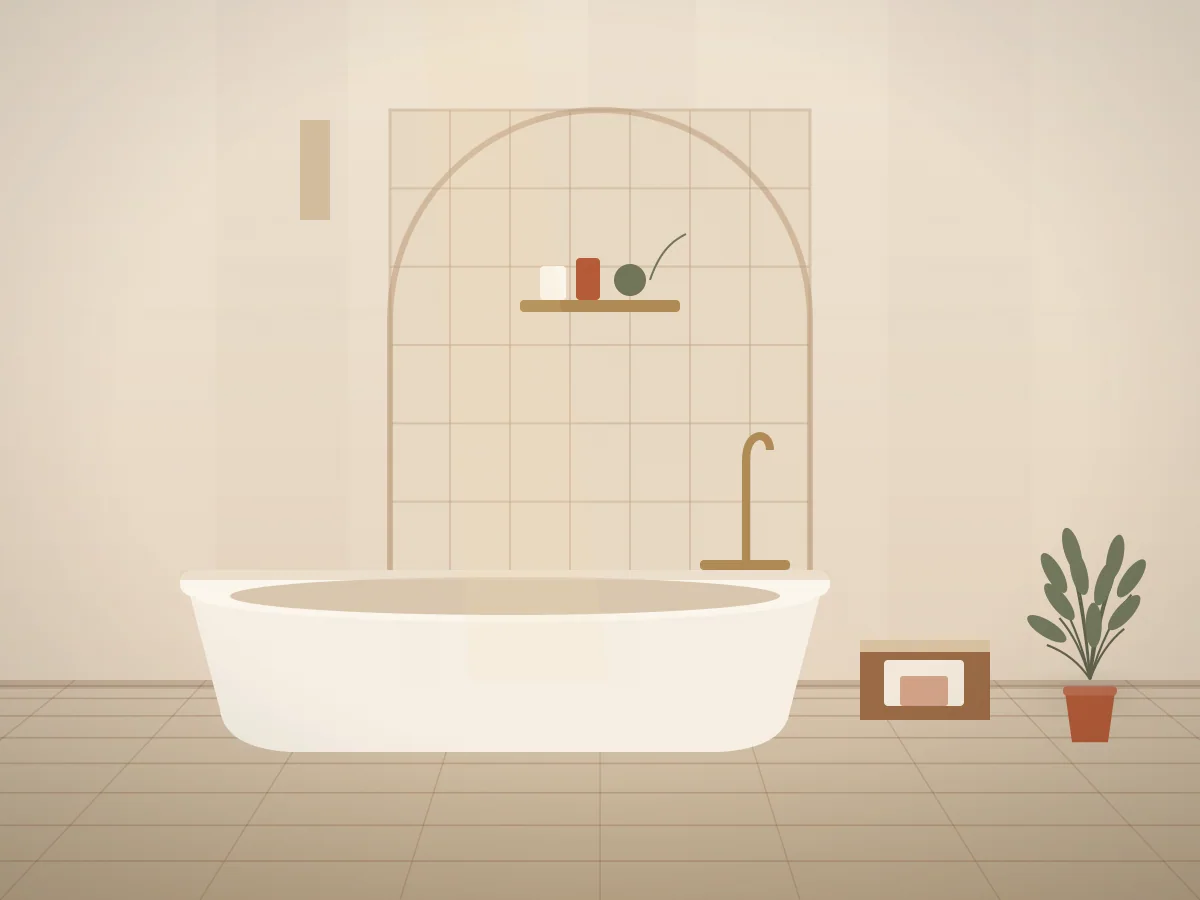
A Mediterranean bathroom is easy to picture and harder to build. The images we save are full of zellige, brass and afternoon light; the reality involves waterproofing membranes, extractor fans and a carefully calculated fall to the drain. The good news is that the practical work disappears behind the finish. Get the order of operations right and the room will look effortless for decades.
Key takeaways
- Fix the layout and waterproofing before choosing tiles or brassware.
- Use slip-rated tiles on the floor, even in a small bathroom.
- Ventilation is part of the design, not an afterthought.
- Budget for the hidden work; it is usually 40–60% of the total cost.
Plan the layout around the pipework
Moving a toilet or a soil stack is expensive; moving a basin or a shower within the same wet zone is usually easier. Keep the bath or shower away from the door if possible, and make sure the door can open fully without hitting a radiator or a towel rail. In a small room, a walk-in shower often makes the space feel larger than a bath, but a bath is still essential for some families and adds resale value in the UK.
Allow at least 70 cm in front of the basin and 60 cm beside the toilet for comfortable use. A shower should be at least 900 × 900 mm for a comfortable adult, and 800 × 800 mm is the practical minimum. If you are installing a niche, position it away from the direct spray and at a height that works for everyone in the household.
Waterproofing comes first
Water damage is the most expensive mistake in a bathroom. The floor and wet walls need a proper waterproofing system — a liquid membrane or a decoupling mat — before tiling. The shower area should be fully tanked, including the corners and the junction with the tray. Use a qualified installer and ask for photographs of the membrane before it is covered.
Check the fall to the drain with a spirit level and test it with water before tiling. A shower that pools water is not a minor annoyance; it is a long-term leak risk. If you are keeping the existing tray, inspect the seal and the waste connection rather than tiling around a problem.
Choose tiles for the room, not just the mood
Handmade character versus easy maintenance
Zellige and handmade glazed tiles are beautiful on walls, but their uneven surface needs sealing and gentle cleaning. On floors, choose a tile with a slip rating appropriate to a wet area — in the UK, look for at least R10 or a barefoot rating if the floor is likely to be wet. Large-format porcelain with a stone or terracotta effect is easier to maintain and works well with underfloor heating.
Terracotta is possible in a bathroom with the right sealer, but it is porous and can be slippery when wet. If you love the look, use it on a wall or as a feature band, and choose a porcelain floor. Limestone and travertine need sealing and are acid-sensitive; avoid them in households with children or frequent guests.
| Element | Share of budget | Notes |
|---|---|---|
| Strip-out and disposal | 5–10% | More if asbestos or hidden damage is found |
| Plumbing and electrics | 20–30% | Move services only if the layout demands it |
| Waterproofing and prep | 10–15% | Never cut this line item |
| Tiles and finishes | 20–25% | Handmade tiles cost more and take longer |
| Sanitaryware and brassware | 15–20% | Mid-range brands often outperform luxury looks |
| Labour and contingency | 15–20% | Keep at least 10% for surprises |
Pick a palette that flatters skin and light
Warm off-white, sand, pale olive and soft terracotta are forgiving in a bathroom, especially under artificial light. A full wall of dark tile can look dramatic but may make a small room feel like a cave; use it in a shower niche or behind a vanity instead. Keep the ceiling light and the grout close to the tile colour to reduce visual noise.
Brassware is the jewellery of the room. Unlacquered brass patinates and needs careful cleaning; polished chrome is practical and reflects light. Avoid mixing too many finishes in one small space. If you choose brass, use it consistently for the tap, shower and handles, and let the mirror frame be the only exception.
Design the lighting and ventilation together
Light the face, not the ceiling
Bathrooms need bright, even light around the mirror and softer light elsewhere. A pair of wall lights either side of the mirror is more flattering than a single overhead fixture. Add a dimmable circuit or a separate night light if you use the bathroom at night. All fixtures must be suitable for the zone; check the IP rating with your electrician.
An extractor fan should run for at least 15 minutes after a shower and be sized for the room. A humidistat or timer switch makes this automatic. If there is a window, open it, but do not rely on it alone in winter. Mould is much easier to prevent than to remove.
Add warmth with texture and plants
- Use a linen or waffle cotton towel rather than a matching set of everything.
- Add a small stool or bench for towels and a candle.
- Choose plants that tolerate humidity: pothos, snake plant, fern.
- Keep a ceramic tray for soap and a small bowl for jewellery.
- Hang a mirror that reflects the best light, not the toilet.
Do not skip the fan
A beautiful bathroom with poor ventilation will develop mould behind the tiles and peeling paint on the ceiling. Spend the money now; it is far cheaper than repairing a water-damaged wall later.
If you are tiling the floor, our terracotta guide explains sealing and maintenance. For the rest of the house, see our Mediterranean kitchen guide and the sustainable renovation checklist.